Conference presentation
Digital (dis)embodiment in human practices, Digital Worlds Workshop 2026, Mary Immaculate College, Limerick, Ireland, 26-27 March 2026.
Abstract
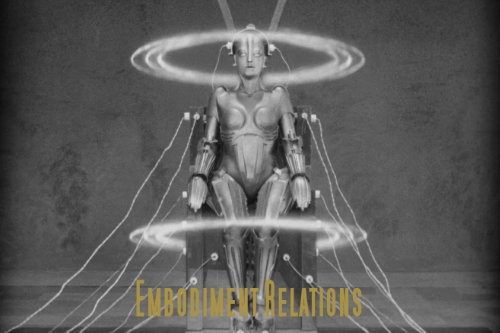
Virtual worlds exist wherever technologies of telepresence create social relationships. Contemporary society provides plentiful examples of digital objects in virtual worlds (games, internet applications, VR/AR, etc.) but telepresence in fact predates the digital, as telegraphy, telephony, and radio broadcasting demonstrate. Heidegger himself mentioned radio as a de-distancing effect in accordance with his phenomenology. Here objects first reveal themselves to us as present-at-hand, so that we might inspect them for their unique qualities and affordances. But with familiarity an object withdraws from our phenomenological horizon, disappearing into the work itself, becoming ready-to-hand as an extension of our embodied abilities. In the formulation of Don Ihde, this forgetting creates an embodiment relation. Though physical and digital objects operate with different modalities depending on their relationship to the social and imaginary realms, their phenomenology is consistent with Merleau-Ponty’s claim that “My body is wherever there is something to be done.” After all, the virtual realm is not autonomous but is rather part of the physical world, both realms being equally real to experience. Hence there is no need to distinguish digital embodiment from other embodiment relations. Indeed, to do so might encourage thinking that virtual worlds are not constrained by the resources and social constructs of the physical world. This position feeds technocratic fantasies of artificial intelligence singularities, transcendence into cyberspace, and reality substitutes such as Star Trek’s Holodeck.