Presentation
“Nature before rights,” Re-Sounding Rights of Nature 2026, Central European Network for Sonic Ecologies, Gdansk, Poland, 15-17 October 2026.
Abstract
Field recording begins with extraction. No matter my intentions, each such act imposes my will on a more-than-human world. Given this conundrum, how can such artistic practices challenge the ideologies of the Anthropocene that see the human as apart from – and superior to – the rest of Nature? A potential remedy is found in the Rights of Nature movement. The emotive appeal of granting the non-human “standing” (Christopher Stone 1972) is plain, but critical writers (Mary Warnock 2012, Noam Sachs 2024) have raised legal and logistical objections. How can the rights of one lifeform be judged against another, considering relationships of predation, parasitism, and symbiosis? How is a tree empowered by having a human speak for it in court? Indeed, this continue a tradition of stewardship embedded in Abrahamic religions. Despite the desire for these proposals to combat extractive principles, the practical implementations operate within existing epistemologies. And though some Indigenous / First Nations peoples have adopted rights of Nature principles as a practical buffer against environmental harm, “the radical character of Indigenous ontologies is not fully reflected in the concept of legal personality” (Mihnea Tănăsescu 2020).
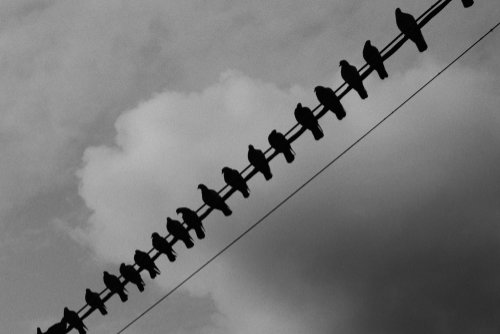
An alternative would begin by acknowledging the position of Nature before the human in a relational matrix, what Arne Naess termed a “biospherical net or field of intrinsic relations.” Nature has no rights, has no responsibilities, owns nothing. It is not constrained by human epistemologies. Nature is instead a wild field of potentialities which reveals itself to us in subtle phenomenal gestures. Our duty of care requires putting Nature first as the figurative (and literal) ground on which we stand to resist hegemonic forces. But how might this rather Utopian proposal help everyday artistic practice? I will present “Caged Birds (Augmentation)” a four-channel composition derived from a local dawn chorus. The modifications made to this recording are designed to echo how humans have transformed those avian species who survive our urban environs. The title is a play on John Cage, but also a reminder that a recording is a sound that is no longer at liberty.
My proposal then is twofold. First, to diffuse this piece at the CENSE International Symposium, the exact methods to be determined by the local environment and practical constraints. Second, to expand on this abstract in a public talk, paper presentation, or round table conversation as appropriate.